AI Voice Singer
AI · Audio · 2025 — ongoing
A composer's AI voice prototype, now a product with 10,000+ users
Richard deCosta had a rough prototype that could sing and no way to sell it. Edge Audio Labs productionized the whole system: model, cloud, plugin, billing and support.
- PyTorch
- ONNX
- FastAPI
- AWS
- JUCE / C++
- Client
- Turing Opera Workshop
- Industry
- AI · Audio
- Engagement
- 2025 — ongoing
- Deployment
- Web platform + audio plugin (VST3 · AU)
- Problem: a composer couldn't hear his own writing in real sung voices, and his AI prototype couldn't scale or reach production.
- What we built: Edge Audio Labs productionized the whole system end to end: reworked model, cloud and on-device runtime, plugin, billing and support.
- Result: a live product with 10,000+ users, running inside the tools composers already use.
The Pain
Richard could write for voices and never hear them: what existed sang "ah" and "oh" in a robotic tone. His prototype closed that gap on his own machine, and nowhere else.
- No path to scale. AI tools glued together: fine for one person, wrong for paying users.
- The core model was exposed. Nothing stopped the engine from being copied off disk.
- No cloud side at all. The part the composer couldn't build himself simply didn't exist.
What We Did
Two decisions shaped the build.
- One model everywhere. Instead of a cloud version and a separate offline one, Edge Audio Labs ported the voice to a single ONNX graph. The same engine renders on a server or on the user's laptop, with no Python at runtime.
- Meet composers where they work. Inside the notation editors they already use, instead of asking them to export a file and come back.
What We Built
- Cloud and on-device engine. The same voice renders on our servers or fully offline on the user's machine.
- Score-editor integrations. Native bridges into Sibelius, Dorico and MuseScore.
- Model and IP protection. Encrypted models and device-bound licensing.
- Managed cloud backend. We built and operate the full infrastructure (FastAPI · AWS).
- Payments and accounts. Subscriptions, billing and user management from day one.
- Customer support. We run ongoing support for the product: a service, not just the code.
Inside Sibelius, Dorico and MuseScore
 Sibelius
 Dorico
 MuseScore
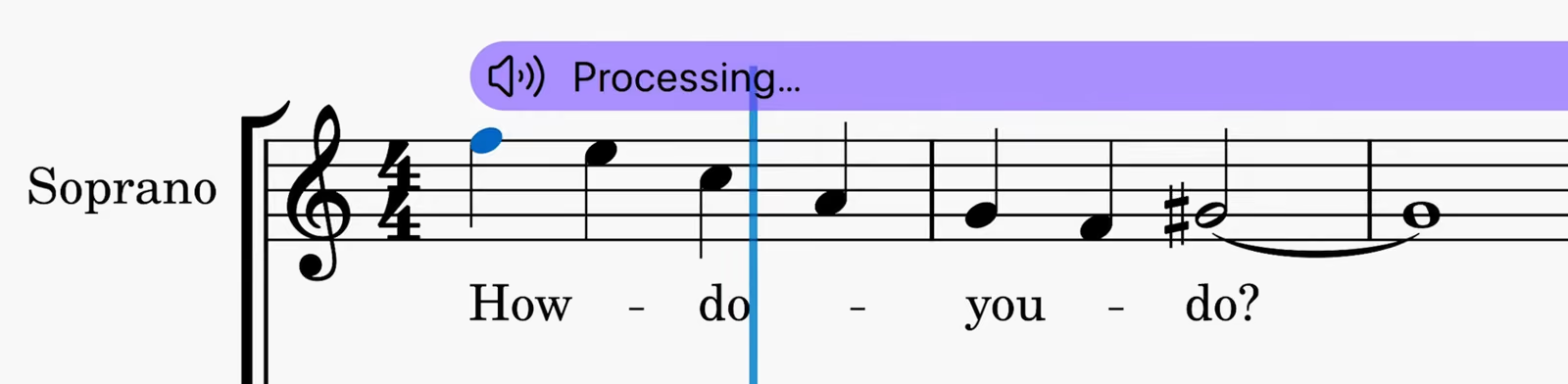
The plugin renders the sung part straight from the score, inside the notation editor the composer already works in. No exporting a file and coming back.
Where It Got Hard
Inside the notation editors.
Sibelius, Dorico and MuseScore are three separate SDKs, each with its own progress reporting and version detection, and the voice had to render correctly in all three. That took longer than the model did.
Specs
- DeploymentWeb platform + audio plugin (VST3 · AU)
- RuntimeCloud rendering + on-device, fully offline
- IntegrationsSibeliusDoricoMuseScore
- StackPyTorchONNXFastAPIAWSJUCE / C++
- ProtectionEncrypted modelsdevice-bound licensing
- Scale10,000+ users40,000+ hours rendered8,000+ downloads
- Timeline2025 to present, engagement ongoing
The Value
Richard never hired an engineering team, and Cantai is live.
A product without building a team
The model, the cloud, the plugin, billing and support — all delivered and run by Edge Audio Labs.
Inside the tools composers already use
Sibelius, Dorico and MuseScore — not one more app to learn.
Cloud or fully offline
The same voice renders on Edge Audio Labs' servers or on the user's own machine.
What made it work wasn't only the engineering. Our team reads scores.
What the Client Says
"Their communication was proactive, and they quickly adapted to evolving requirements."